.svg)

Over the past decade, software subscriptions have become a normal part of running a business. Tools for accounting, customer management, project tracking, marketing, communication, and automation are now widely available to companies of every size.
For many businesses, this has created an unexpected problem.
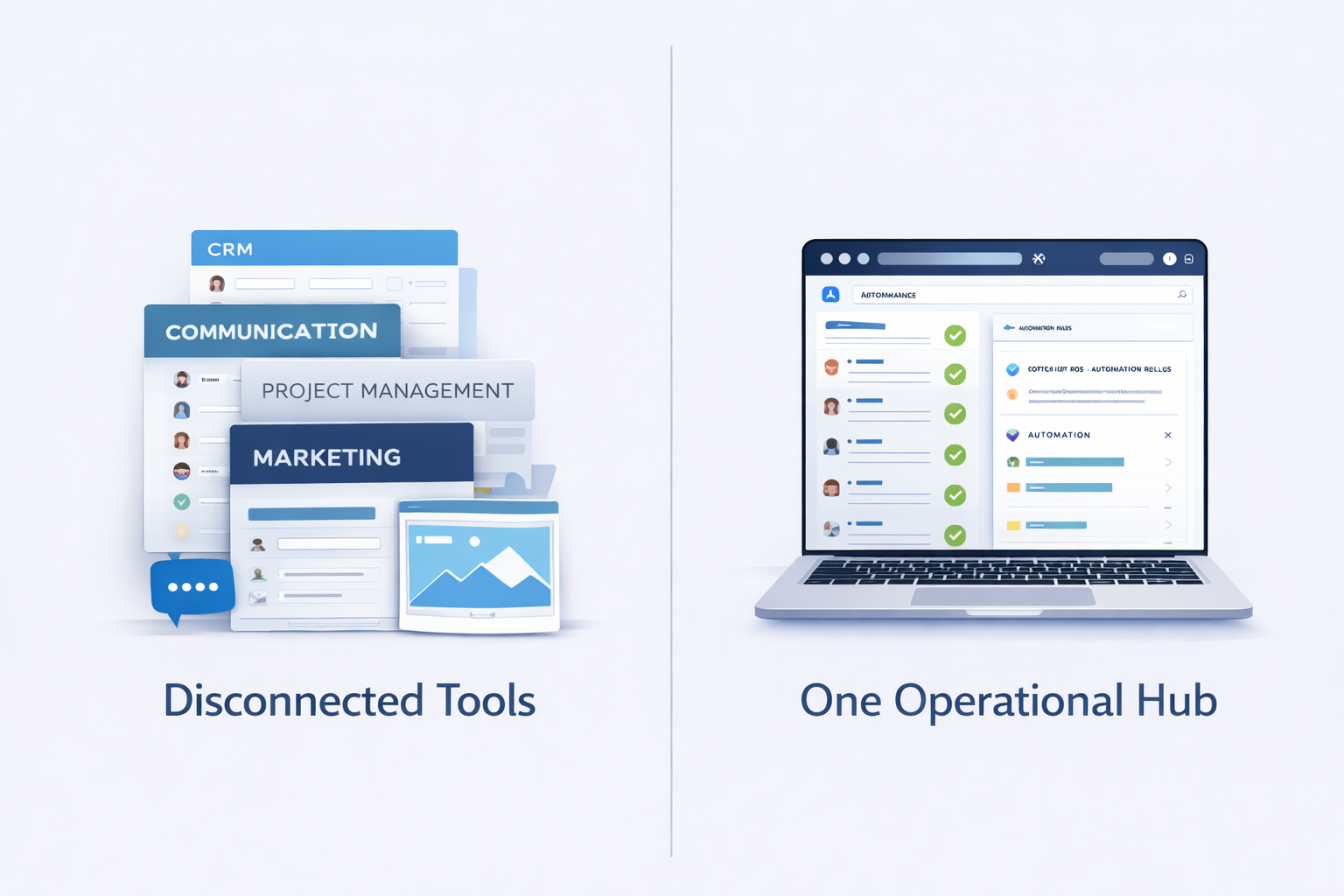
Instead of simplifying operations, companies often end up paying for a long list of tools that only partially solve their problems. One system manages customer relationships. Another manages email campaigns. A third handles project tracking. A fourth manages internal communication.
Over time, the software stack becomes fragmented.
Business owners may find themselves paying hundreds or even thousands of dollars each month in subscriptions while still struggling with disorganized workflows and disconnected systems.
The issue is rarely the tools themselves. The problem is how they are used.
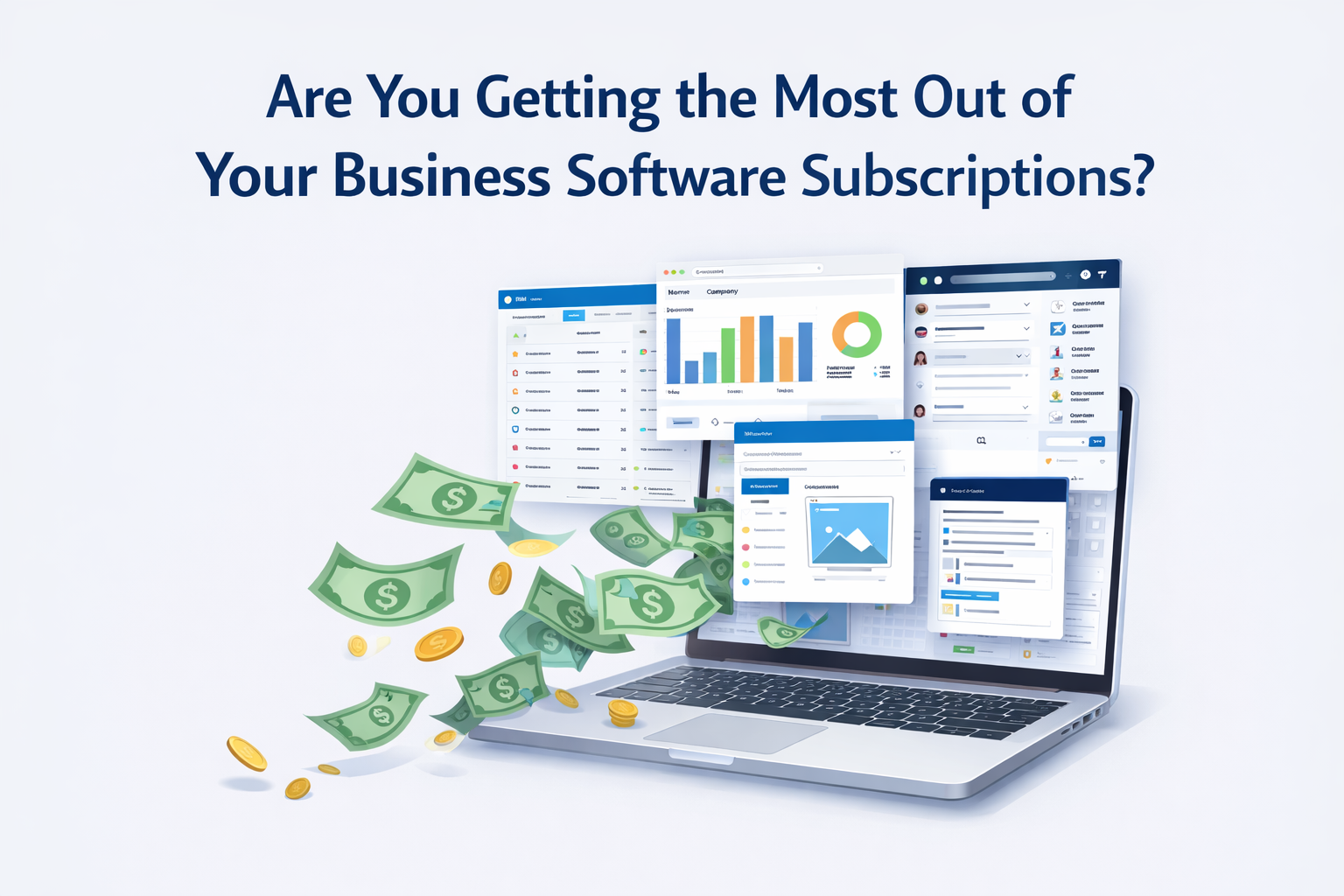
Many business platforms include powerful features that companies never fully implement. CRM platforms can automate follow ups. Accounting systems can generate real time financial reporting. Marketing tools can run automated campaigns that nurture leads without manual effort.
However, most businesses only use a small portion of these capabilities.
Sometimes this happens because the platform is complex. In other cases, the business simply never had the time to properly configure the system. Teams continue using the software the same way they always have, relying on manual processes even when automation features are available.
The result is a situation where businesses are paying for advanced tools but operating as if they were still using spreadsheets and email alone.
This is one of the most common operational inefficiencies small businesses experience.
Improving this situation does not always require buying new software. Often, it simply requires designing better systems around the tools already in place.
When systems are designed intentionally, many separate tools can be simplified or replaced entirely. CRM platforms can manage leads, automate follow ups, send email campaigns, and track communication history. Workflow automation can eliminate repetitive tasks that employees previously handled manually.
Platforms like OpsHub are designed to bring several of these operational functions together in one system. Instead of maintaining multiple disconnected subscriptions, businesses can manage lead tracking, communication, marketing campaigns, and automation workflows from a single operational hub.
The goal is not to accumulate more software. The goal is to create systems that allow the business to run efficiently without requiring constant manual coordination.
When tools and systems are aligned properly, businesses spend less time managing software and more time focusing on growth.





.svg)

.png)