.svg)

Most business owners assume their biggest constraint is people.
When growth begins to create pressure, the first instinct is usually to hire. More employees should mean more capacity, more organization, and less stress on the team.
But this assumption often hides the real issue.
In many businesses, the underlying problem is not a lack of people. It is a lack of systems.
Without clear processes, documented workflows, and centralized information, even talented teams struggle to operate efficiently. Tasks get repeated, communication becomes inconsistent, and small operational mistakes start compounding.
Adding more people to that environment rarely fixes the problem.
It often multiplies it.
More employees means more coordination, more communication, and more opportunities for information to get lost.

Strong businesses run on strong systems.
A system defines how work moves through the organization. It establishes where information lives, how decisions are made, and who is responsible for each stage of a process.
When these structures are clear, employees can focus on execution instead of constantly figuring out what comes next.
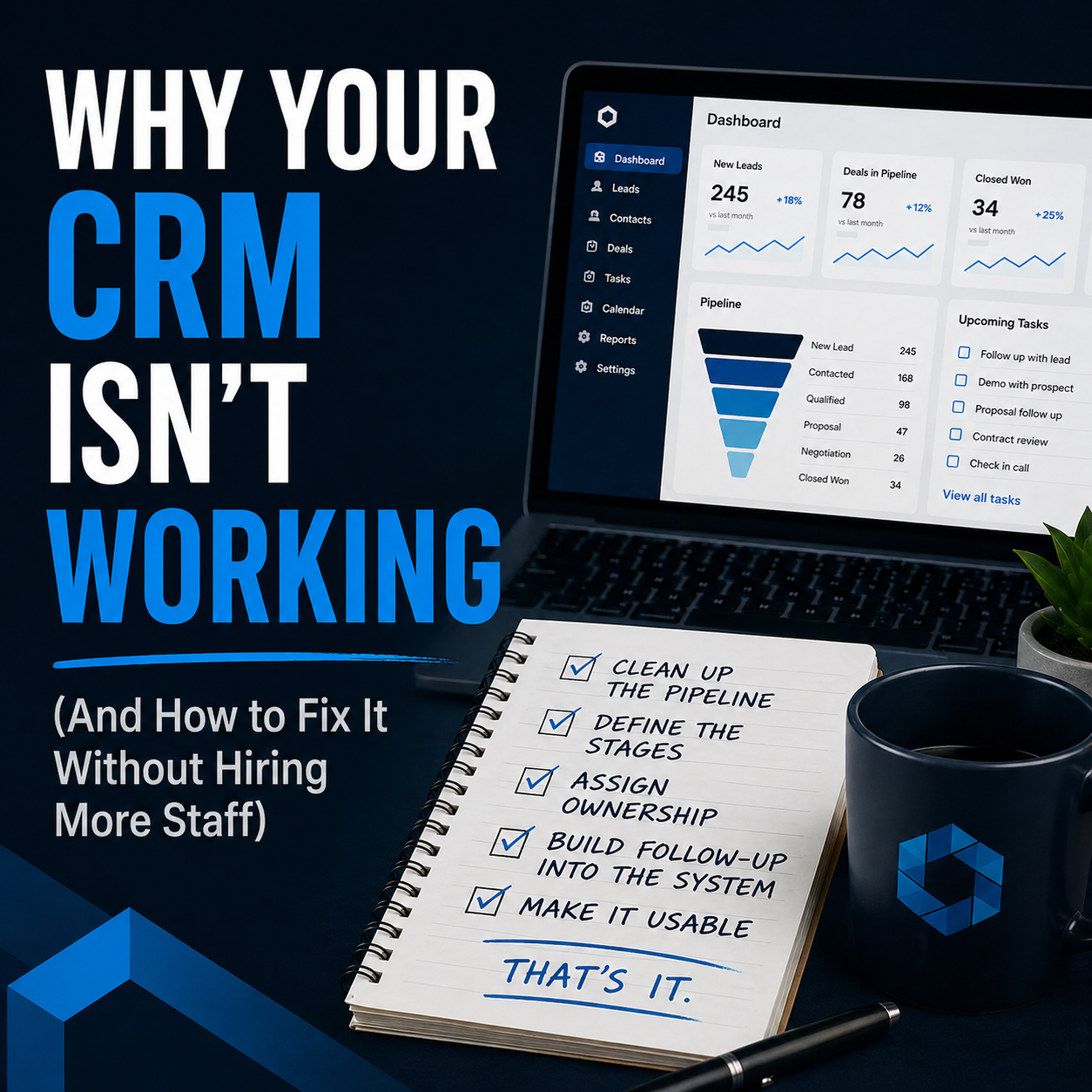
For example, a properly implemented CRM system does far more than store contact information. It structures the entire sales pipeline, tracks opportunities, and ensures follow-up happens consistently.
Workflow automation extends this further.
Automated workflows can trigger tasks, assign responsibilities, update records, and notify team members when actions are required. Instead of relying on memory, the system itself drives progress.
This reduces operational friction and dramatically improves consistency.
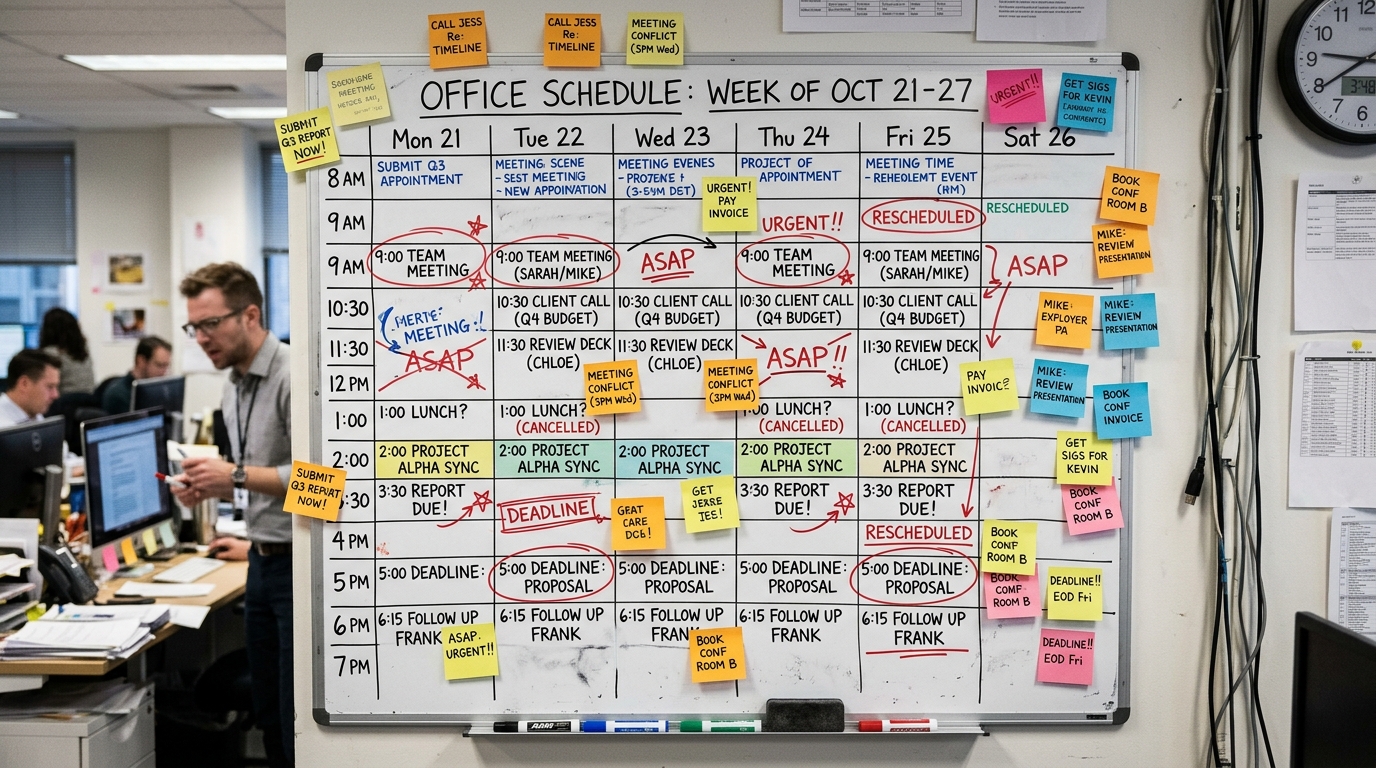
The businesses that scale successfully understand this principle early.
They recognize that growth requires operational clarity. Instead of simply adding staff, they invest in building systems that allow their team to work more effectively.
When systems are strong, teams feel more organized. Communication improves. Decisions become easier. And work flows through the business with far less resistance.
Ironically, many organizations discover they need fewer people than they expected once the right systems are in place.
The work hasn’t disappeared.
It has simply become structured.
And when work has structure, growth becomes far more manageable.





.svg)

.png)