.svg)

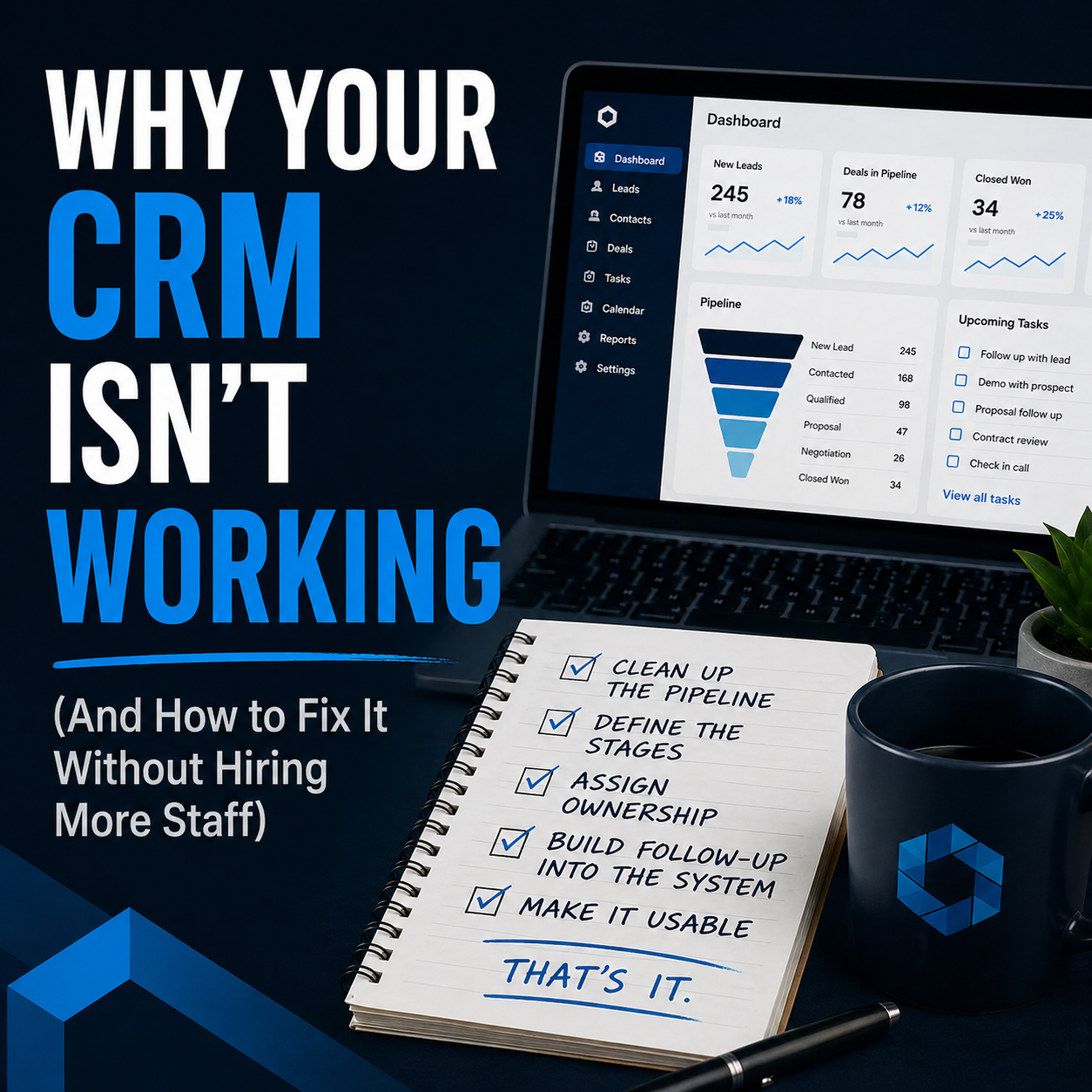
As businesses grow, managing leads, conversations, and client relationships becomes increasingly difficult without a structured system. Emails get buried in inboxes, follow-ups are forgotten, and valuable opportunities can quietly slip through the cracks.
Customer Relationship Management platforms, commonly known as CRMs, were created to solve this problem. A well-implemented CRM provides a centralized place to track leads, manage communication, and understand where opportunities stand within a sales pipeline.
Platforms like HubSpot and Salesforce have become widely known solutions for managing these processes. Both tools provide powerful capabilities for tracking contacts, automating follow-ups, and organizing sales pipelines.
But choosing the right CRM is not always about selecting the most powerful platform. It is about choosing the system that fits the way a business actually operates.
.png)
HubSpot is often considered one of the most accessible CRM platforms for small and growing businesses. It offers an intuitive interface, built-in marketing tools, and a free entry-level version that allows companies to begin organizing their leads quickly.
Salesforce, on the other hand, is known for its extensive customization and enterprise-level capabilities. Large organizations often rely on Salesforce because it can support complex sales teams, multiple departments, and advanced reporting structures.
However, both platforms share a common challenge for many small businesses: implementation.
Even the most powerful CRM becomes ineffective if it is not configured properly. Pipelines must be designed to match the business’s sales process. Automation needs to be structured correctly. Teams must understand how to consistently use the system.
Without this structure, businesses often find themselves paying for CRM software that they barely use.
The right CRM depends on the size of the business, the complexity of the sales process, and how much support the company needs to implement and maintain the system.
HubSpot is often a strong choice for small businesses that want a well-known platform with built-in marketing tools and a relatively simple learning curve. Salesforce is typically better suited for large organizations with complex sales teams, multiple departments, and the resources to manage a highly customized system.
However, many small businesses fall into a different category. They need a CRM that manages leads, organizes communication, and automates follow-ups, but they do not necessarily have the time or technical resources to configure and maintain a large platform.
This is where systems like OpsHub can provide a different approach.
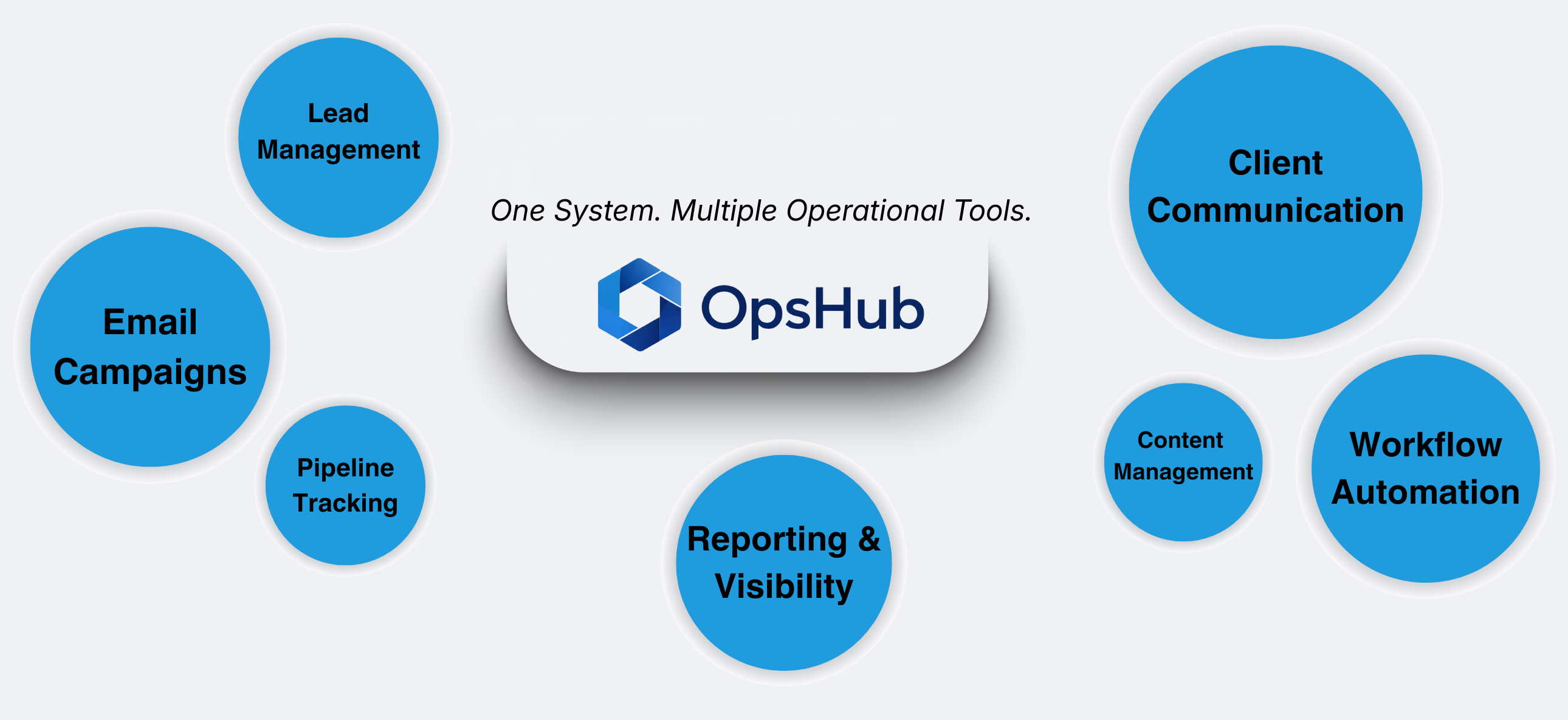
OpsHub is designed to combine CRM functionality with the operational support that many small businesses actually need. Instead of simply providing software, the platform is paired with implementation and operational support that helps ensure the system is configured correctly and used consistently.
For many growing businesses, the most valuable CRM is not necessarily the most powerful one. It is the one that is implemented properly, maintained consistently, and designed around the way the business actually operates.
When the system is built correctly, a CRM stops being just another tool and becomes the structure that keeps leads organized and opportunities moving forward.





.svg)

.png)