.svg)

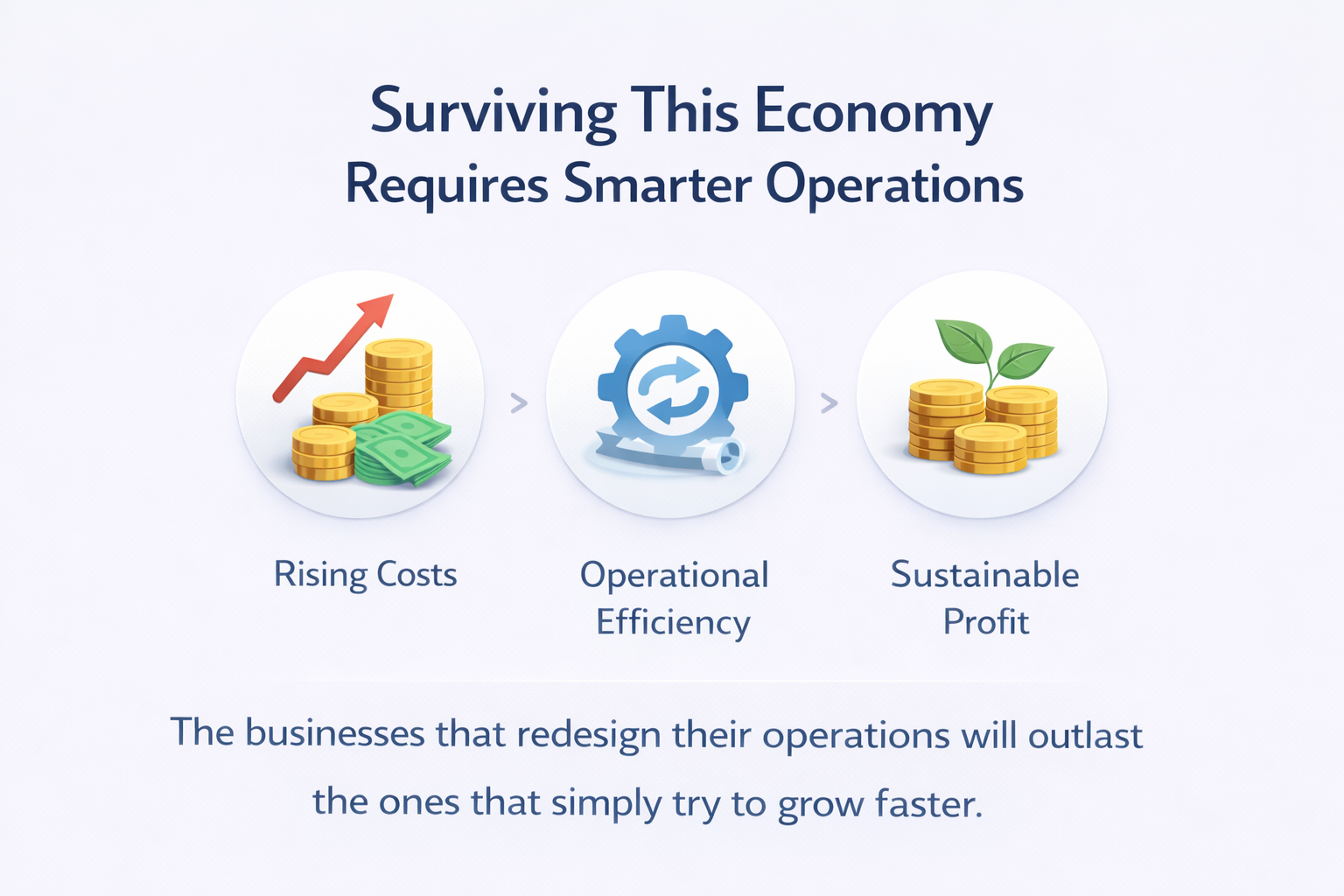
When costs rise, small businesses usually face the same difficult choices. They can raise prices, reduce expenses, or attempt to increase revenue fast enough to offset the pressure.
In reality, most businesses end up trying a combination of all three.
However, many business owners overlook one of the most powerful ways to protect profitability: improving operational efficiency.
Disorganized workflows, manual processes, and disconnected systems quietly drain time and resources every day. When teams spend hours managing repetitive administrative tasks, that time is no longer available for activities that generate revenue or improve customer experience.
Even small improvements in operational efficiency can significantly reduce the pressure businesses feel during difficult economic periods.
One of the most common operational problems small businesses face is fragmentation. Leads are tracked in one place, client communication happens in another, marketing campaigns run through a separate platform, and financial data lives somewhere else entirely.
Over time, these disconnected tools create friction inside the business.
Employees spend time switching between platforms, information becomes difficult to track, and business owners lose visibility into what is actually happening inside their operations.
The result is a business that feels busy but not necessarily productive.
Companies that invest time in organizing their systems often find that they can accomplish the same amount of work with fewer manual steps and fewer operational headaches.

This is why many growing businesses begin focusing on operational systems rather than simply adding more people.
When core systems are designed properly, companies can manage leads, communication, workflows, and reporting from a central operational structure. Automation can remove repetitive tasks, dashboards can provide clear visibility into performance, and teams can focus on higher value work.
Platforms like OpsHub are designed to support this type of structure by bringing several operational functions together in one place. Instead of managing multiple disconnected tools, businesses can build systems that keep their operations organized and scalable.
Economic pressure often forces businesses to become more disciplined about how they operate. For companies that focus on building stronger systems, those challenges can ultimately become an opportunity to run a more efficient and resilient business.





.svg)

.png)