.svg)

Many businesses begin with simple processes that work well at the early stages. Leads arrive through word of mouth, finances are tracked manually, and tasks are handled informally by the owner or a small team.
At first, this approach feels manageable.
But as the business grows, the number of clients, conversations, invoices, and tasks increases quickly. What once felt simple begins to feel chaotic. Information gets lost in inboxes, follow-ups become inconsistent, and it becomes harder to see what is actually happening inside the business.
This is the stage where systems become important.
A system does not have to be complicated. It simply provides a consistent way for important work to move through the business without relying on memory or constant oversight.

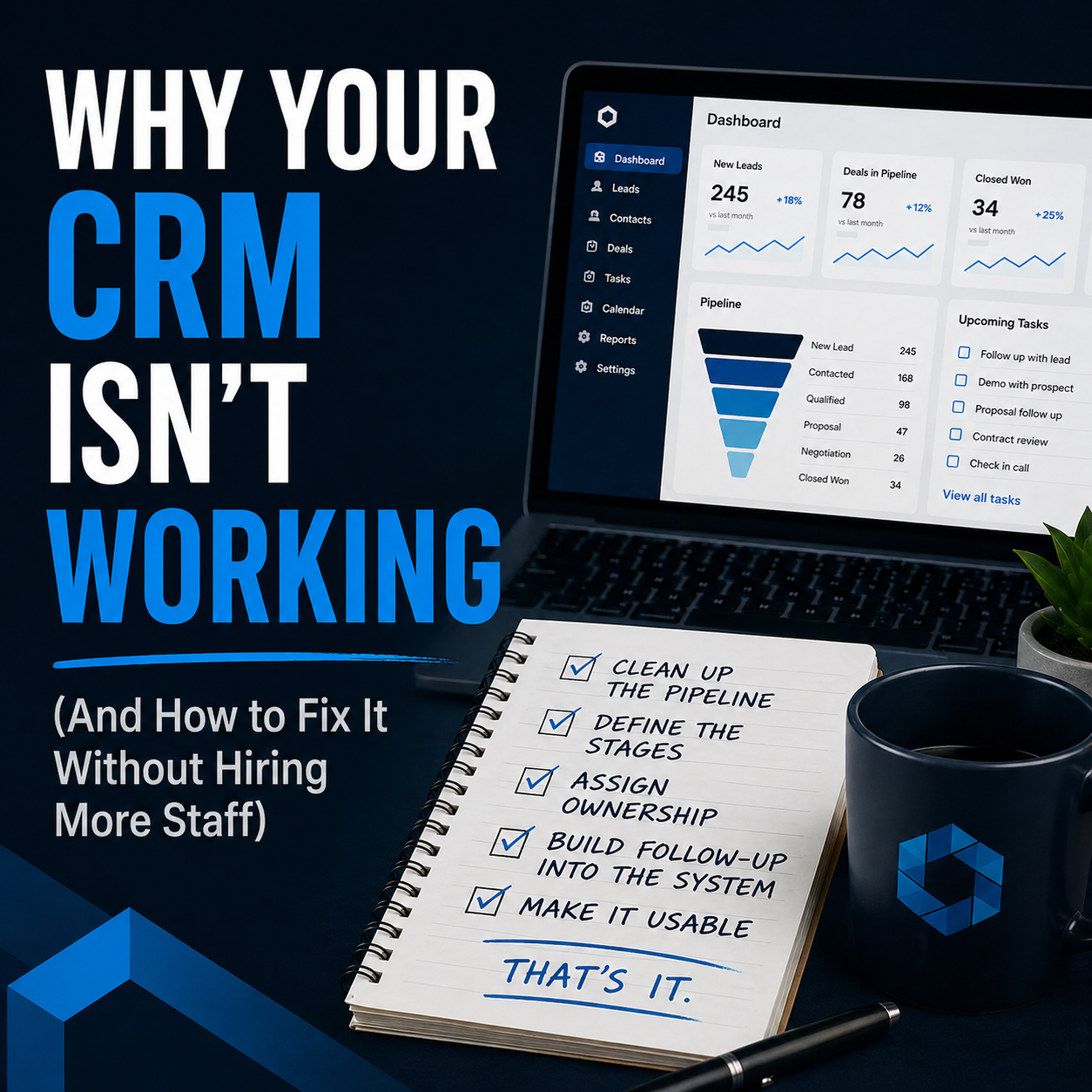
One of the first systems every business should build is a lead management system.
Many small businesses lose opportunities simply because they do not have a reliable way to track incoming leads. A message arrives through the website, another comes through email, and a potential client calls the office. Without a structured process, those conversations quickly become scattered.
A lead management system ensures that every inquiry enters a single pipeline where it can be tracked and followed through consistently.
Financial tracking is another foundational system. When receipts, invoices, and expenses are not organized properly, business owners lose visibility into their numbers. A structured financial system ensures that transactions are captured consistently and that the business has accurate reporting on its performance.
Together, these systems protect both revenue and financial clarity.

As teams grow, operational workflows become equally important.
Work moves between people, projects require multiple steps, and communication becomes more complex. Without defined workflows, employees spend time figuring out what needs to happen next rather than completing the work itself.
Operational workflows provide structure for how tasks move through the business. They define responsibilities, reduce confusion, and allow teams to work more efficiently.
When businesses invest in a few core systems early, growth becomes much easier to manage. Instead of reacting to problems as they appear, the company operates within a structure that supports consistent execution.
And in many cases, those few systems make the difference between a business that struggles as it grows and one that becomes stronger with every new client.





.svg)

.png)